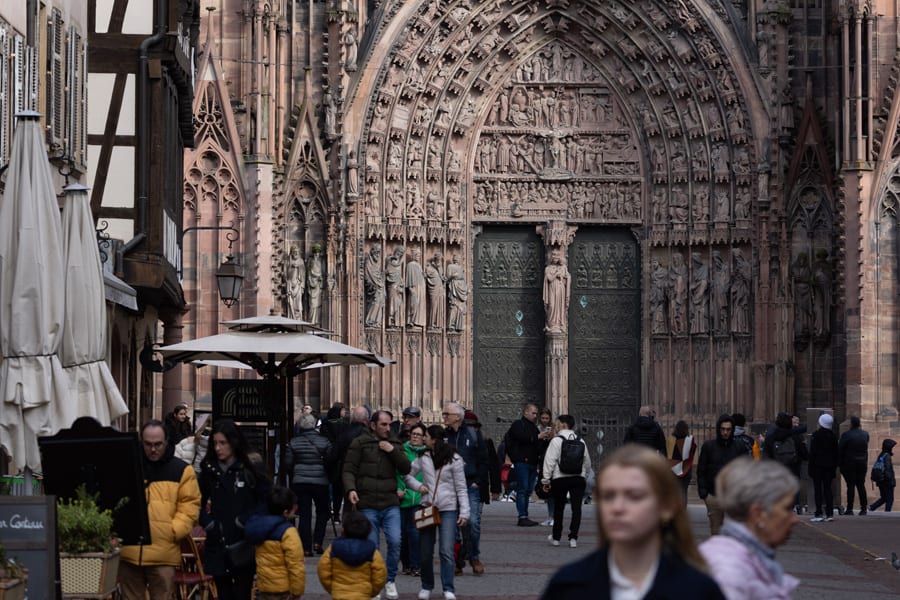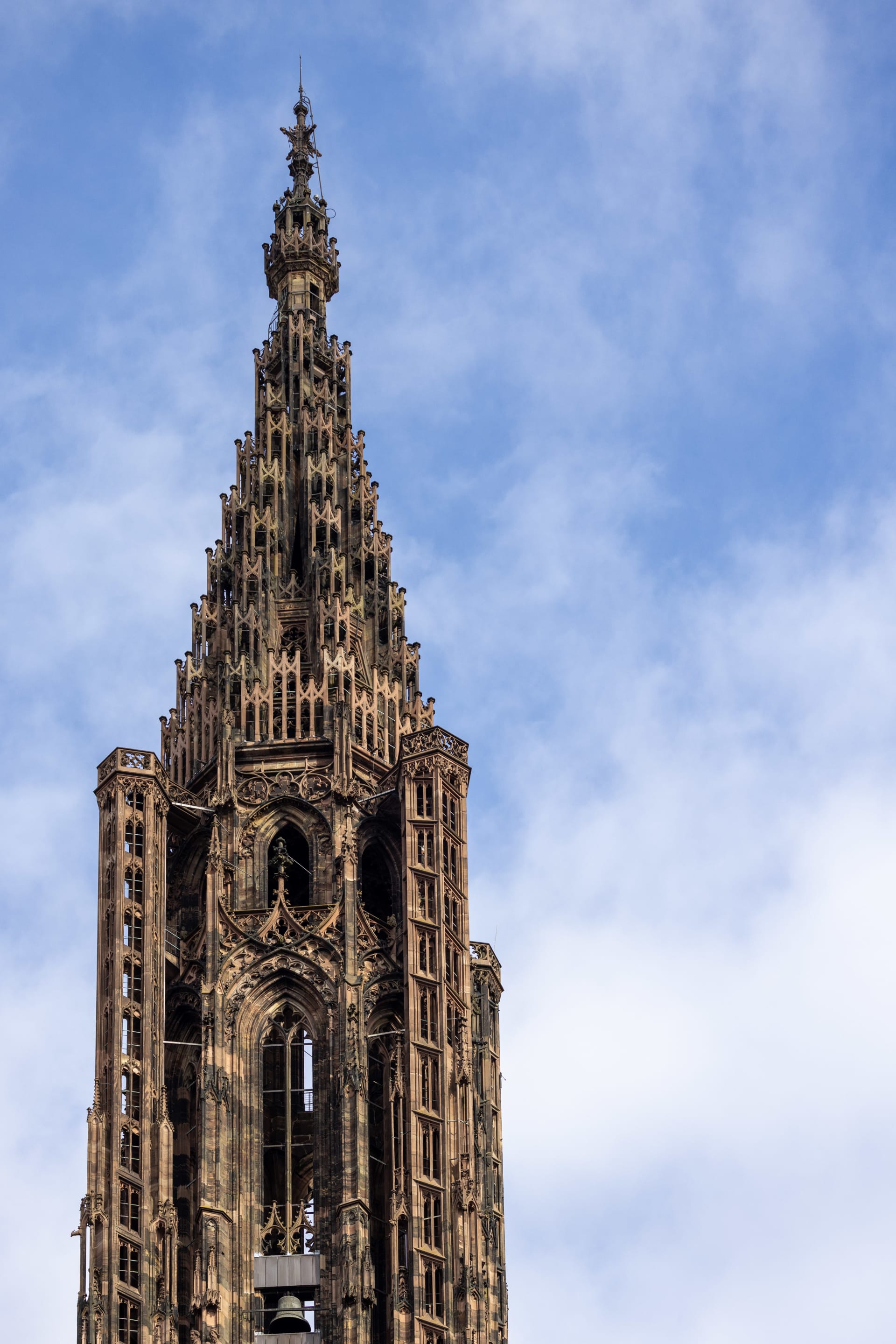

There are cathedrals, and then there is Strasbourg. Rising 142 meters from the heart of the historic Grande Île, the Cathédrale Notre Dame de Strasbourg is not merely a structure of devotion; it is a geological event captured in porous pink Vosges sandstone. Its single, soaring spire—once the tallest man-made structure in the world—beckons visitors through the crowded streets and into a millennium of ambition, artistry, and light.
The façade is a breathtaking, three-dimensional tapestry. It is the definitive statement of High Gothic architecture.
Monumental Lace: The Exterior
The main façade is a breathtaking, three-dimensional tapestry. It is the definitive statement of High Gothic architecture: a cascading curtain of carved stone. Unlike the smooth, planar surfaces of earlier Romanesque churches, Strasbourg’s western face is an explosion of detail, a network of statues, pinnacles, and intricate traceries so fine that Victor Hugo famously called it a “gigantic and delicate marvel.” The whole surface appears to breathe, changing hue from rose to gold with the sun’s angle, a constant testament to the medieval guild of stonecutters who pushed material and engineering to its breaking point.